Showing posts with label Mesa Verde National Park. Show all posts

Wednesday, September 2, 2015

Cliff Palace and Balcony House Hikes (Mesa Verde National Park)


One of the highlights of our visit to Mesa Verde National Park was two docent led hikes to the ancient cliff ruins of Balcony House and Cliff Palace. In order to preserve the fragile remains, and because getting to and from them can be a little tricky, visitors are not allowed to visit these ruins unattended. The hikes included winding around the sides of mountains using toe-holds and rope railings, climbing up and down 32-foot ladders, and at times squeezing through small tunnels through the rocks. If you aren't claustrophobic or afraid of heights, these hikes are well worth the extra effort to catch a glimpse into how the people of this region lived in the past.

Cliff Palace is the largest cliff dwelling in North America and was constructed and refurbished continuously from 1190 CE through 1260 CE. Constructed primarily out of sandstone mortar, and wooden beams, it contains 23 kivas (round sunken rooms of ceremonial importance), 150 rooms, and had a population of approximately 100 people. It is thought that Cliff Palace was a social and administrative site with high ceremonial usage, stemming from the higher ratio of rooms to kivas (9 to1, as opposed to the average of 12 to 1 in other cliff dwellings in the area).

Balcony House is set on a high ledge facing east. It has 45 rooms and 2 kivas, and illustrates how room and passageway construction evolved through time. With its well-preserved rooms, kivas, and plazas, Balcony House stands as a tribute to the Pueblo Indians of Arizona and New Mexico who built and occupied the site in the 13th century.


Wednesday, August 12, 2015

Petroglyph Point Loop Trail (Mesa Verde National Park)

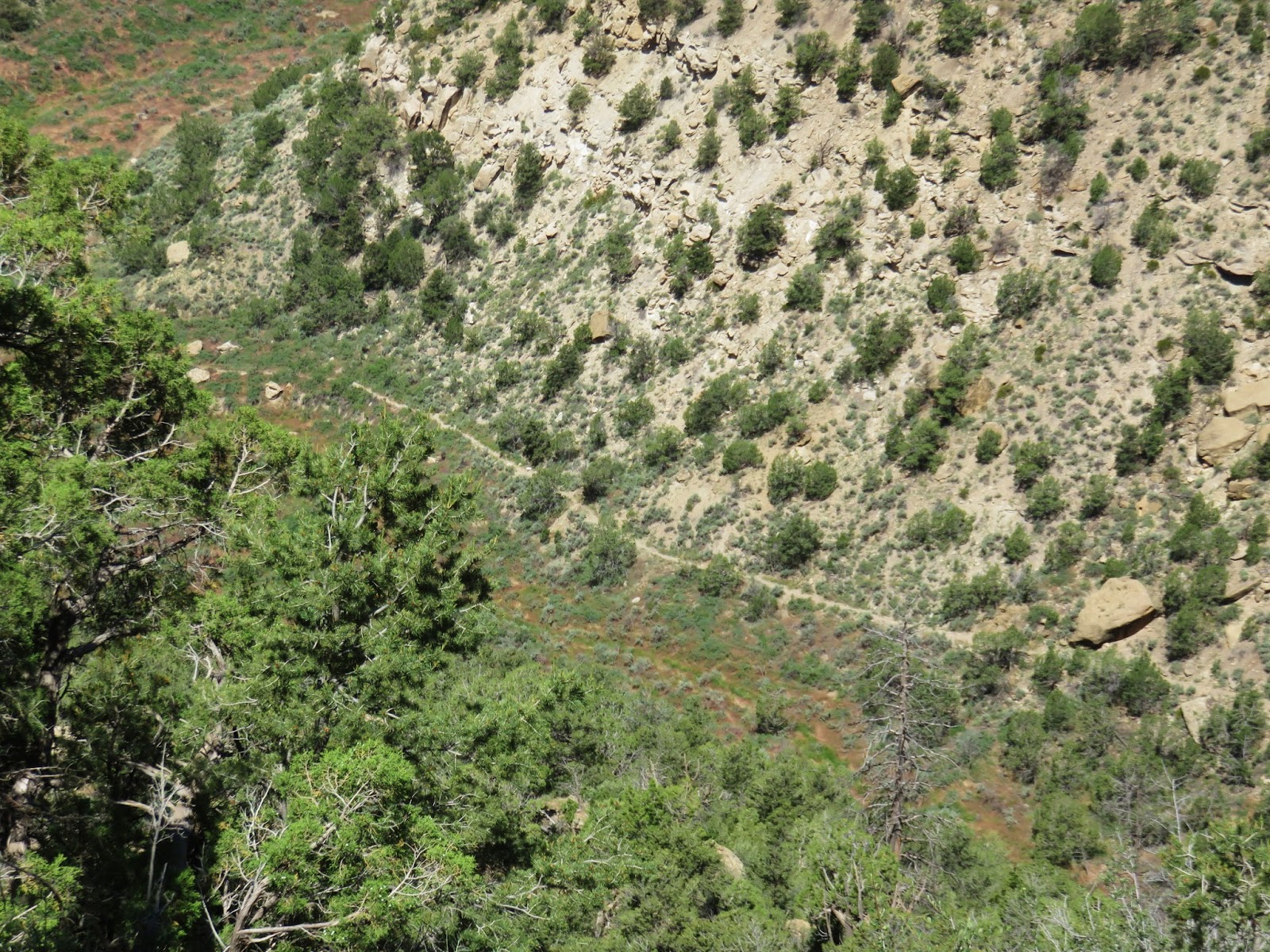
One of the largest and best known group of petroglyphs in the Mesa Verde National Park is found along the Petroglyph Point Loop Trail, and when we took this hike we found ourselves scrambling up and down steps, squeezing through giant boulders, and trekking through various wildlife habitats. At times the trail was surrounded by trees making the trail shady and cool. Other portions were more exposed and sparse where the effects of the sun were quite intense. The hike was moderately strenuous with only about 200-feet elevation gain over the 3-mile loop, but with areas of uneven terrain, and a winding trail with many ups and downs, we felt the strain by the time we reached the petroglyphs, located near the top of the climb. It was intriguing to think we were following the same trails the ancient Puebloans used all those centuries ago, and to ponder the meaning of the Rock Art and the importance it may have held for the artists and the people of those times. Modern Hopi have interpreted the petroglyphs as depictions of various clans of people, including the clans of Eagle, Mountain Sheep, Parrot, Horned Toad, Mountain Lion, and the Ancestral Puebloans. Perhaps this was the interpretation of the original rock artists, but nobody can say for sure. This hike ranks high among the many adventures we enjoyed during our visit to the park. 


Wednesday, July 29, 2015

Mesa Verde National Park


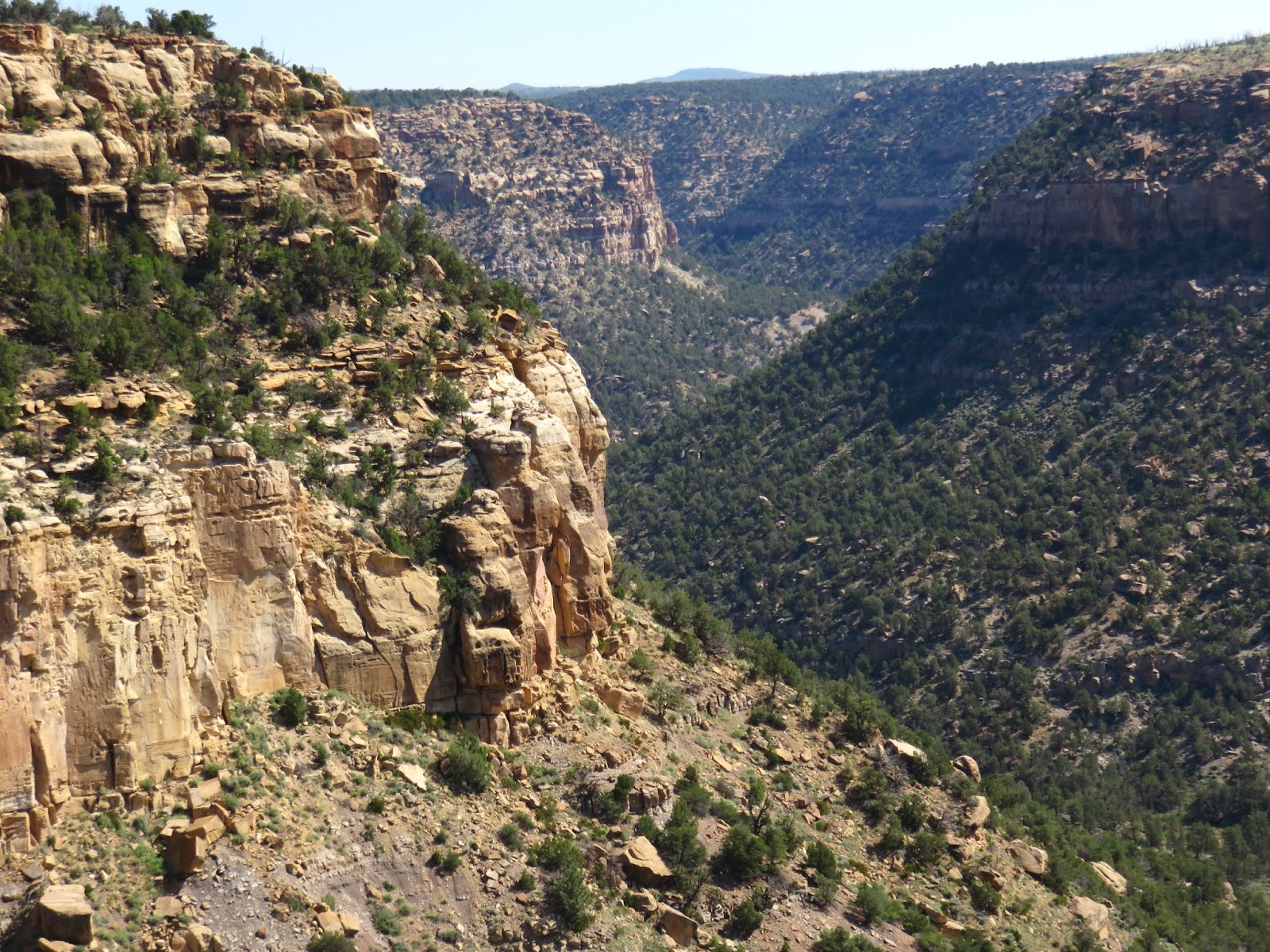
Mesa Verde National Park, located in Colorado near the Four Corners region, was created in 1906 to preserve the archeological heritage of the Ancestral Pueblo people, both atop the mesas and in the cliff dwellings below. Comprised of 52,485 acres with more than 4000 sites and 600 cliff dwellings, it is the largest archeological preserve in the United States. Some of the cliff dwellings are open to self-guided tours, such as the Spruce Tree House near the Visitor Center, and others are only available via ranger led tours. The first day we were there (in June 2015) we drove through the park taking in views at the many overlooks, ending the day with a walk down to the Spruce Tree House. There isn't much definitive information on the lives of the ancients who occupied this region from 550 CE through the early 1200's, spanning over 700 years, but there are many clues as to how they may have lived, and archeologists have given us their best interpretations based on what they left behind. Wandering through what remains of these ancient people was fascinating and I spent much time imagining what their lives must have been like. Here are some pictures from our first exploration of the park.