Showing posts with label Page. Show all posts

Tuesday, May 24, 2016

Page, Arizona (Part 4, Lees Ferry, Vermilion Cliffs, Cliff Dwellers)


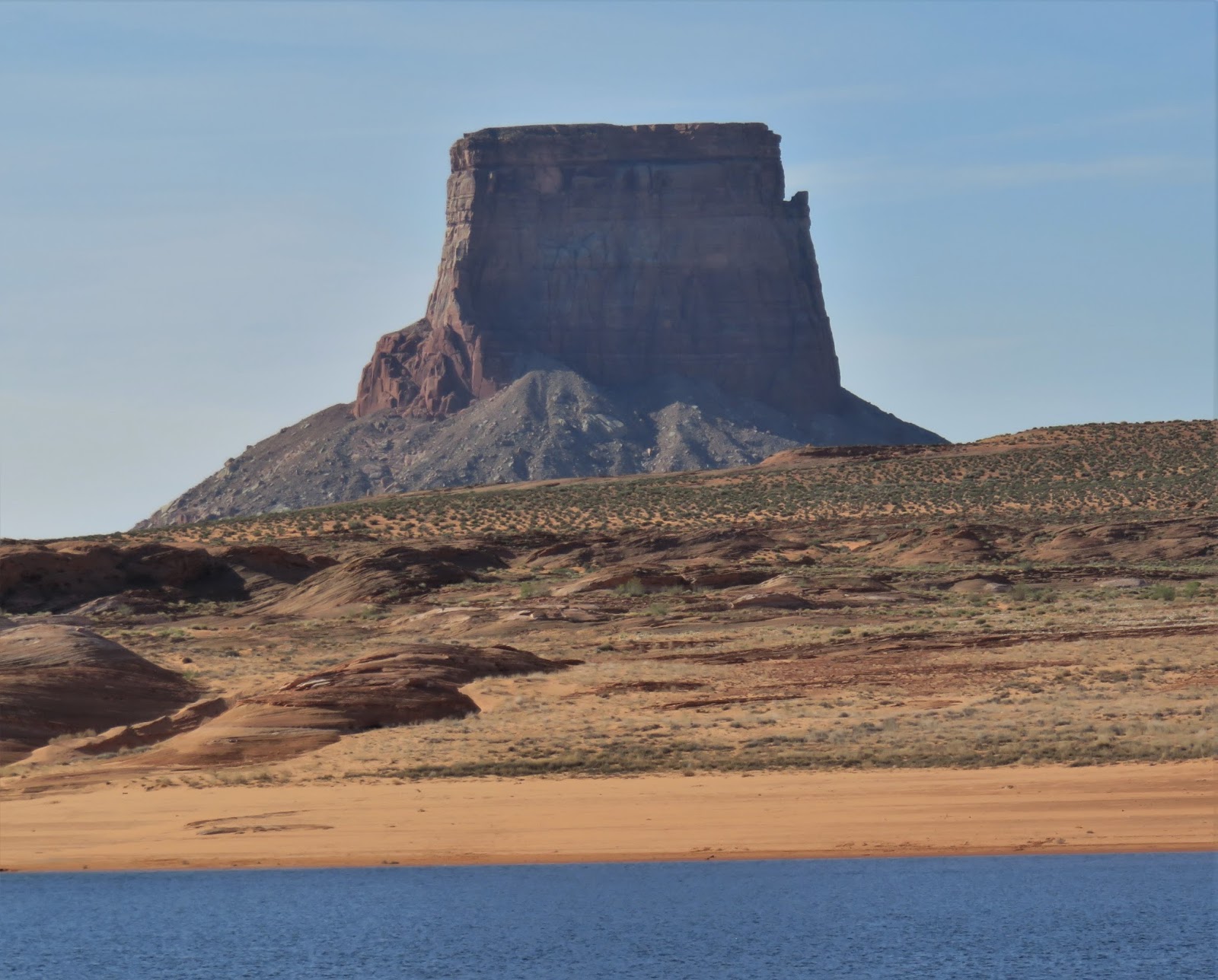
The last thing we did before leaving Page was take a drive to Lees Ferry and the Vermilion Cliffs, about 8-miles southwest of Page and 9 miles south of the Utah-Arizona border. On tap for us was a hike near the Colorado River, and a drive in the surrounding area to a couple of historic points of interest.

Lees Ferry’s unique geography makes it the only place in hundreds of miles where you can easily access the Colorado River from both sides. Historically this was the site of a ferry operated by John Doyle Lee, for whom the site is named. In the early 20th century a bridge was built that superseded the ferry, and allowed for more efficient automobile travel.

The Vermilion Cliffs National Monument is part of the Colorado Plateau in northern Arizona, with scenic views of towering cliffs and deep canyons. Our visit was just on the periphery of the area, as we did not venture deep into the National Monument where a hiking permit is required for access. We hiked Cathedral Wash, a minor drainage that begins at the base of the Vermilion Cliffs. This short hike took us through a sandstone slot canyon with many interesting rock formations, plant life, birds, insects, and reptiles. Hikers are warned that this wash would be dangerous during or shortly after any rains due to flash flooding, but we had a blue sky day with no hint of rain to hamper our enjoyment.

After our hike, we took a scenic drive along Highway 89 to the location of the Cliff Dwellers. Not knowing what to expect, and just reading the signpost announcing the “Cliff Dwellers” where head, we thought this was going to be archeological remains from ancient native peoples. As it turned out, these are in fact archeological remains of a sort, but something much more recent, only going back to the 1920’s. The story goes that Blanche and Bill Russel, the original homesteaders at Cliff Dwellers established a trading post here in 1920, after their car broke down near the big rocks. Blanche thought this would be a nice place to live, and the rest, as they say, is history. Their original home still stands at the end of the property. The unique rock house they built for themselves was called Cliff Dwellers by the local cowboys because of its proximity to the Vermilion Cliffs.  

Here are some pictures from our final exploration while staying in Page, Arizona.


Sunday, May 22, 2016

Page, Arizona (Part 3, Rainbow Bridge National Monument)


Rainbow Bridge National Monument is part of the Glen Canyon National Recreation Area, and is often described as the world’s highest natural bridge (a natural rock formation where a rock arch forms, with an opening underneath) . Located in southern Utah in the isolated canyons at the feet of Navajo Mountain, access to Rainbow Bridge is only possible via a several day hike, or by boat. While in Page, Dan and I took the guided tour from Wahweap Marina to Rainbow Bridge, a 100-mile round trip boat ride that took us to a dock where we walked about a mile to visit the monument. Rainbow Bridge was known for centuries by the Native Americans who have long held the bridge sacred, and who call it Nonnezoshe or “rainbow turned to stone”.

Because Nonnezoshe is sacred to Native Americans, the National Park Service worked with five Native American nations affiliated with Rainbow Bridge to ensure that this place considered to be religious and sacred to the Navajo, Hopi, Paiute, and Ute be protected and visited in a respectful manner. These tribes expressed concerns about visitors approaching or walking under the bridge, and all are asked to be respectful of its significance to the peoples who have long held Rainbow Bridge sacred.

I had mixed feelings during our visit to the monument. I almost felt like I was trespassing, encroaching on ancient and holy land that should be reserved for religious and ceremonial occasions. With the constant flow of people streaming in and out, with not everyone as respectful as they should be, it seems all but impossible to preserve this hallowed ground, to protect it from exploitation and ruination. Yet, there we were, amongst the revelers, no different than the multitudes of others, outsiders at best, and trying our best to show this place the reverence it deserved. I’m still struggling to reconcile my mixed feelings on how we can best blend and mingle this country’s ancient and modern roots.


Wednesday, May 11, 2016

Page, Arizona (Part 2, Lower Antelope Canyon)

Both Dan and I agree that the highlight of our visit to Page, Arizona was our tour of Antelope Canyon. Hiking is always high on our list, and we both look forward to exploring new trails wherever we go. The day we arrived in Page, we talked briefly to a ranger at the Glen Canyon Dam, looking for information on local hikes, and he mentioned the Antelope Canyon hikes (an “Upper” and a “Lower”), saying they were both really good, but his personal preference was Lower Antelope Canyon. With no more information than that, we put this hike on our list of things to do over the next four days. To say that we were unprepared for what awaited us doesn’t begin to describe our surprise, delight, and utter amazement we experienced on this tour. (And, a tour is really what it turned out to be, as opposed to a hike.)

Located within the Navajo Nation just east of Page, Antelope Canyon is what is known as a slot canyon, a narrow canyon formed by water rushing through rock. A slot canyon is significantly deeper than it is wide, and at times can feel like a cave, although the “roof” is always open. Also referred to as The Corkscrew, the Navajo name for Lower Antelope Canyon is Hazdistazí, and means “spiral rock arches”. When we arrived at the canyon Visitor Center, we were still completely unaware of what to expect. We looked out over the sprawling landscape, and it appeared that this “hike” or “tour” would be nothing more than a stroll across a wide and barren stretch of desert terrain. Little did we know that we were about to be totally blown away!

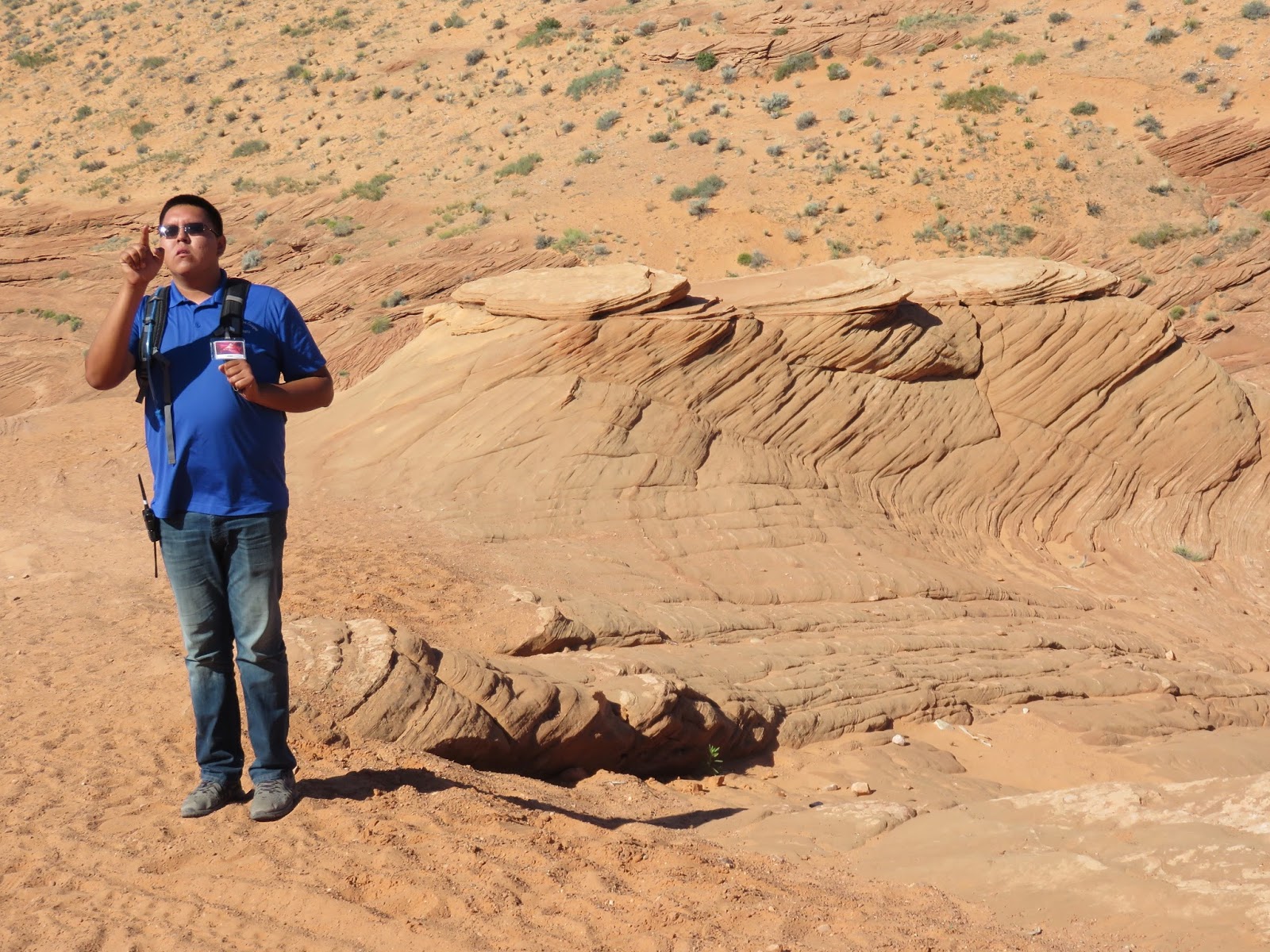
Our guide, Josh, led us to the entry, giving us information on the geography and legacy of the area. As we approached the first set of ladders leading down a narrow crack to the bottom of the canyon, it became quite clear that we were walking into something quite extraordinary. We were in a place unlike any other we could have imagined! It was impossible not to take a multitude of pictures, and what our eye didn’t pick up, the camera did. The colors, shadows, and shapes changed as the sun moved across the sky, with sunlight pouring in like a waterfall one minute, and dark figures appearing to jump out of the rocks another. We walked maybe a total of one mile, but it was the most visually amazing mile I’ve ever walked in my life! There really are no words to describe this once in a lifetime visual experience – I’ll just let the pictures tell the story!