Our visit to New
York (the state, the capital (Albany),
and New York City) wrapped up our summer
adventures of touring New England and New
York. Come mid September, it was time to start our
slow meander south, to eventually end up in Florida, this year's winter home. Our first
stop along the way was Ashland, Virginia, a small town 15 miles north of Richmond. Although we spent time in Richmond
in 2011 for our capital visit, there were other reasons (being close to a small
airport for a flight to California in October) and other attractions in this
part of the country we wanted to come back to see.
First on our list of attractions was a
visit to Monticello, the primary plantation
and residence of Thomas Jefferson located just outside Charlottesville. Jefferson designed the house
himself (he called this his "essay in architecture"), and the name 'Monticello' means
"little mount" in Italian, a fitting descriptor since it sits atop
the summit of an 850-foot high peak. For
the price of admission, we were welcome to stroll the beautiful grounds on our
own, in addition to attending several docent-led tours of the inside of the
house, the gardens, and slavery on the plantation. We opted to attend the tour
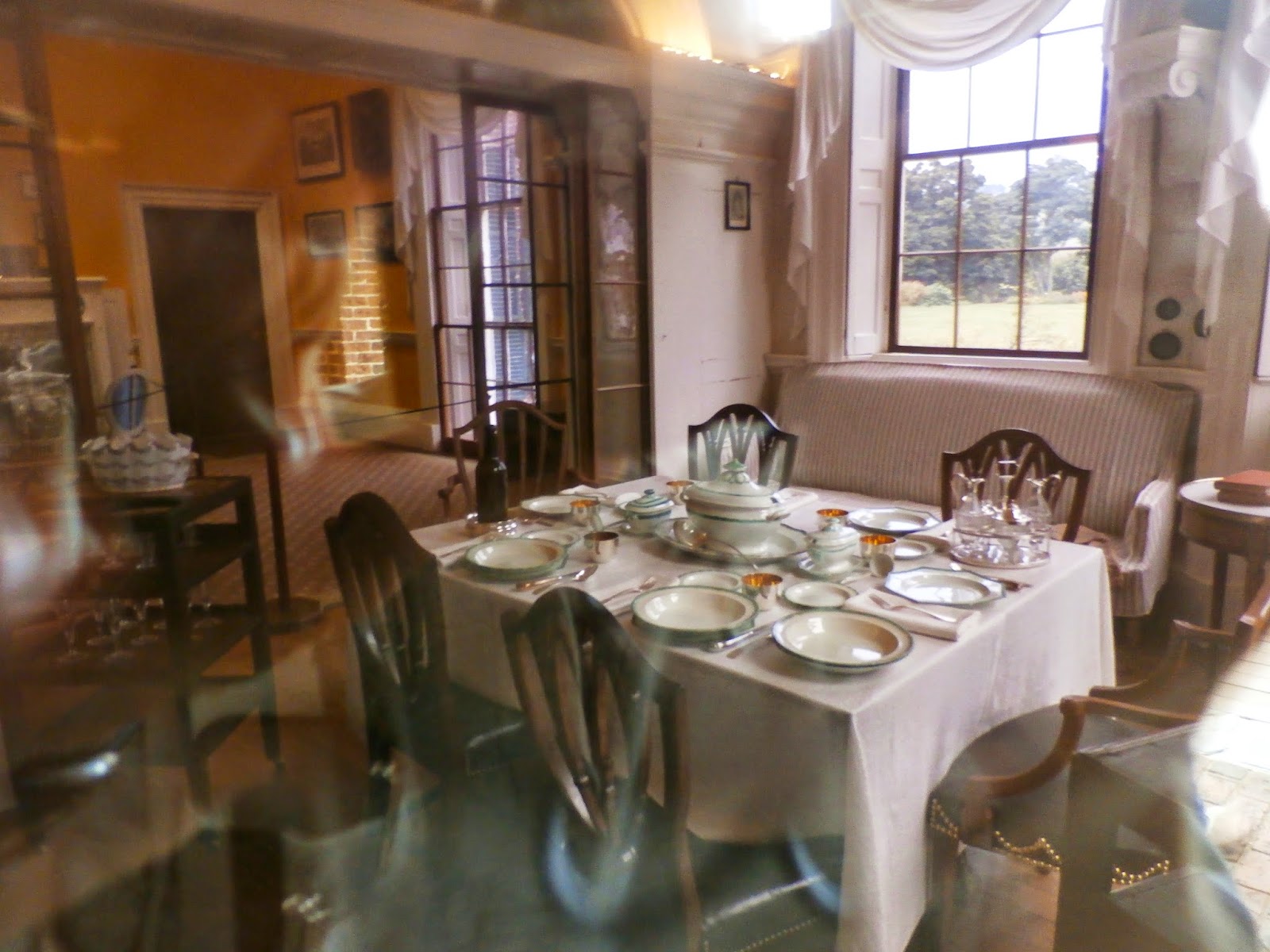
of the house, although no photography was allowed inside, and we also wandered
around the forested and beautiful acreage on our own.
Of special interest to us were the meticulously
kept gardens, including a producing vegetable garden, and a number of flower
gardens, all recreated to mimic what grew during the time Jefferson occupied Monticello. Jefferson was very interested in experimental horticulture
and tried his hand at exotic (for the times) vegetables, fruit orchards,
vineyards, and grafting. But there was much more than gardening going on at Monticello. An area
tagged Mulberry Row was the industrial hub of Jefferson's
5,000 acre enterprise. It was the center of work and domestic life for dozens
of people - free whites, free blacks, indentured servants, and enslaved people
- who worked as tinsmiths, nailers, sawyers, carpenters, joiners, charcoal-burners,
spinners, weavers, hostlers, and domestic servants. The work of dozens of men,
women, and children supported Jefferson's
elite household, which allowed him to build and renovate his house, and carry
out agricultural and industrial activities.
Although I have mixed feelings about all
that was able to be accomplished at Monticello,
because it relied so heavily on slave labor, I did learn many things about
Thomas Jefferson that I didn't know before. He was an educated man and a
scholar; he could read in six languages; he founded the University
of Virginia in Charlottesville; he was a prolific reader,
writer, inventor, and builder. But with all of all his accomplishments he himself
was least impressed with being the third president of the United States.
In fact, as he requested, his tombstone reads: "Here was buried Thomas
Jefferson, Author of the Declaration of American Independence, of the Statute
of Virginia for religious freedom, and Father of the University of Virginia".
As for the presidency, he referred to this as a "splendid misery".